Trapping removes active rodents without leaving unretrieved carcasses inside wall voids, whereas structural exclusion permanently denies entry to future colonies. Relying solely on poison baits creates sanitary hazards…
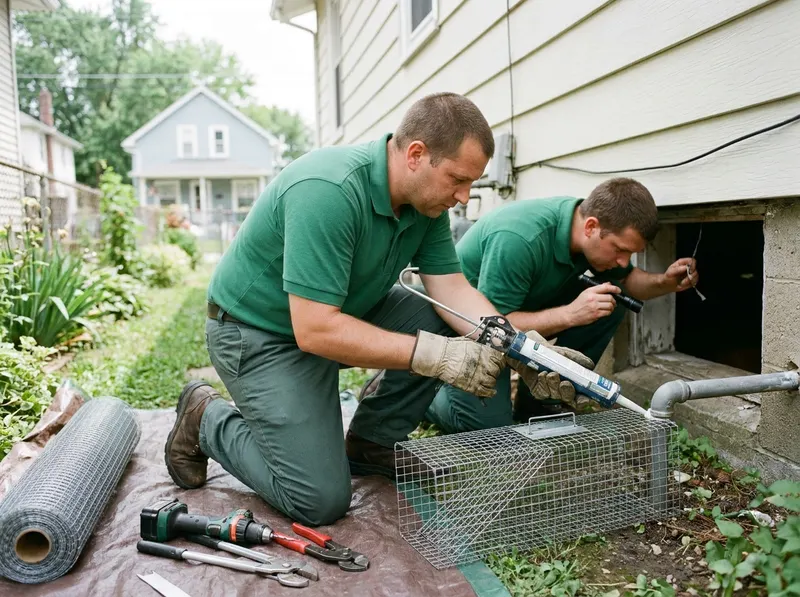
Trapping removes active rodents without leaving unretrieved carcasses inside wall voids, whereas structural exclusion permanently denies entry to future colonies. Relying solely on poison baits creates sanitary hazards and foul odors within interior wall bays. Combining mechanical capture with physical barrier installation ensures living quarters remain sanitary, safe for household pets, and quiet at night.
Historic architecture in neighborhoods like the Oregon District, South Park Historic District, and Huffman Historic District often presents limestone foundations, settled brickwork, and aged utility penetrations. Nearby riparian zones near RiverScape MetroPark and Carillon Historical Park provide natural foraging corridors for rodent populations seeking winter shelter. Technicians seal gaps as narrow as one-quarter inch using heavy-gauge wire mesh, metal flashing, and non-toxic sealants that rodents cannot chew through.
In post-war bungalows and modern homes across Belmont, Shroyer Park, and the Dayton View Historic District, foundation vents and deteriorated crawlspace access doors serve as prime intrusion points. The clean slate protocol isolates nesting pressure using focused integrated pest management rather than broad chemical saturations. Homeowners regain peace of mind and clean indoor air without entering mandatory monthly service subscriptions.
Every job gets a firm, written price after a free on-site visit.
Tell us about your rodent trapping and exclusion job in Dayton and we'll send a clear, written quote — usually the same day.
 Fresh Start Pest Control