Perimeter insect barriers serve homeowners who prefer exterior-first pest management, resolving pest pressure at the building envelope before interior chemical applications become necessary. By establishing a…
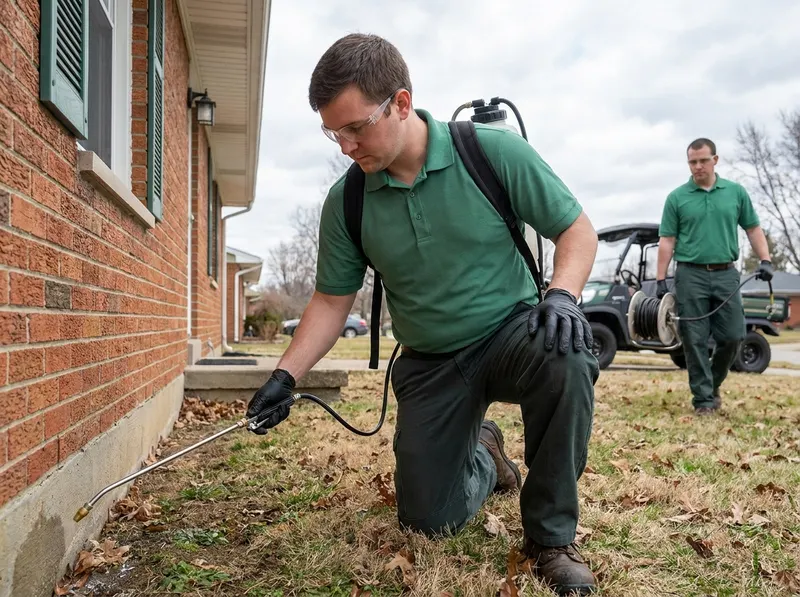
Perimeter insect barriers serve homeowners who prefer exterior-first pest management, resolving pest pressure at the building envelope before interior chemical applications become necessary. By establishing a continuous protective zone along foundation walls, rim joists, porch supports, and ground-level door thresholds, low-odor IPM products intercept crawling pests while they harbor outdoors. While interior spot treatments address active, established indoor infestations, an exterior barrier operates as a preventive filter. The trade-off requires periodic maintenance re-applications, as rain, direct sunlight, and lawn care activity naturally degrade exterior residual barriers over a 60 to 90 day window.
Homes across Montgomery County experience distinct insect movements driven by regional weather patterns and soil moisture from the Great Miami River basin. In historic neighborhoods like South Park Historic District, St. Anne's Hill, Huffman Historic District, and Dayton View Historic District, mature tree canopy shade and stone or brick foundations offer cool crevices where cellar spiders and house centipedes gather during seasonal temperature shifts. Properties near RiverScape MetroPark, Belmont, Walnut Hills, Shroyer Park, Five Oaks, Carillon, and the Oregon District often see increased spider activity along exterior eaves, triggered by flying insects attracted to porch lighting. Applying precision perimeter treatments directly to foundation seams, window wells, and weep holes interrupts these harborages and establishes sanitary peace of mind inside the residence.
Every job gets a firm, written price after a free on-site visit.
Tell us about your perimeter spider and general insect barrier job in Dayton and we'll send a clear, written quote — usually the same day.
 Fresh Start Pest Control